If you are drawn to neighborhoods that feel polished from the first turn in, Pointe Marin stands out for a reason. Its streets, homes, and landscaping read as part of a larger plan, yet the area still offers enough architectural variety to feel visually interesting rather than repetitive. If you want to understand what gives Pointe Marin its look and why that matters for buyers and sellers, this guide will walk you through the neighborhood’s architectural character, streetscape design, and curb appeal patterns. Let’s dive in.
Pointe Marin at a Glance
Pointe Marin is in Novato’s Ignacio area, not San Rafael. That distinction matters because the neighborhood’s identity is closely tied to how the City of Novato planned and maintains the area.
According to the city, the Pointe Marin Community Facilities District was formed in 2002 to help finance storm drainage, public street, and landscaping improvements. The city’s 2024 to 2025 tax report says the project area includes 342 units, which helps explain why the neighborhood feels cohesive and master planned rather than assembled in phases without a shared visual direction.
Architectural Style in Pointe Marin
Pointe Marin’s original homes were built out in the early 2000s, and that era still shapes the neighborhood today. The early stock leaned large in scale, with substantial single-family homes designed to make a strong impression from the street.
A 2005 description of the Breakers at Pointe Marin noted six floor plans, including five two-story homes and one single-story option. Those homes ranged from 3,205 to 4,413 square feet, reinforcing the neighborhood’s spacious, move-up-home character.
Original Design Language
The original architectural feel in Pointe Marin can best be described as traditional with Mediterranean influence. Features noted in early model homes included arched entries, two-story foyers, trellised courtyards, granite counters, stainless appliances, and 3-car garages.
From the outside, that translates into homes with a formal presence, layered rooflines, and front elevations designed for curb appeal. Even where individual finishes have changed over time, that larger suburban-luxury framework still anchors the neighborhood.
How the Style Has Evolved
One of the more interesting parts of Pointe Marin is that it is not visually one-note. Current resale listings describe homes in the neighborhood as Mediterranean-style, traditional, Tudor-style, and Napa-inspired farmhouse.
That tells you something important about the area. While the neighborhood began with a relatively unified early-2000s design vocabulary, owners have updated exteriors over time in ways that add variety without breaking the overall sense of consistency.
Streetscapes That Feel Planned
Pointe Marin’s visual appeal is not just about the houses. Much of the neighborhood’s character comes from the way the streets themselves are laid out and maintained.
The public realm includes wide sidewalks, landscaped edges, trees, and pedestrian-lighted sidewalks. Early coverage also pointed to tall sycamore trees, which helps explain the mature, shaded feeling many visitors notice when driving or walking through the area.
Why the Streets Look So Cohesive
The City of Novato says it maintains roadside landscapes, linear parks, sound-wall landscapes, and pedestrian-lighted sidewalks within the Pointe Marin CFD. That work includes pruning, tree trimming, irrigation adjustments, weed control, planting, and sidewalk safety.
In practical terms, that level of ongoing maintenance supports a clean and finished appearance across the neighborhood. It also helps preserve the sense that Pointe Marin was designed as a complete environment, not just a collection of homes.
Courts, Cul-de-Sacs, and Limited Through-Traffic
Another defining feature of Pointe Marin is its street pattern. Rather than relying on a tight grid, the neighborhood appears to favor residential courts and cul-de-sacs.
Recent listings frequently mention quiet cul-de-sacs, flat cul-de-sacs, no through traffic, and tree-lined streets. That layout gives the neighborhood a more internalized and residential feel, with less emphasis on cars moving through and more emphasis on the homes, sidewalks, and landscaping.
The Hillside Backdrop Matters
Even though many of the streets feel fairly level, Pointe Marin benefits from a hillside setting that adds visual depth. Hillside Park, a city-managed public space in the Pointe Marin area of Ignacio, is built into a slope off Highland Drive and includes views of oak trees and nearby hills.
That natural backdrop softens the neighborhood’s newer construction feel. It gives many streets and homes a stronger connection to the surrounding Marin landscape, which is a big part of the area’s appeal.
Curb Appeal Trends You’ll Notice
As homes in Pointe Marin have changed hands and been updated, certain curb appeal themes have become increasingly common. These updates tend to modernize the look of the homes while still fitting the neighborhood’s original scale and layout.
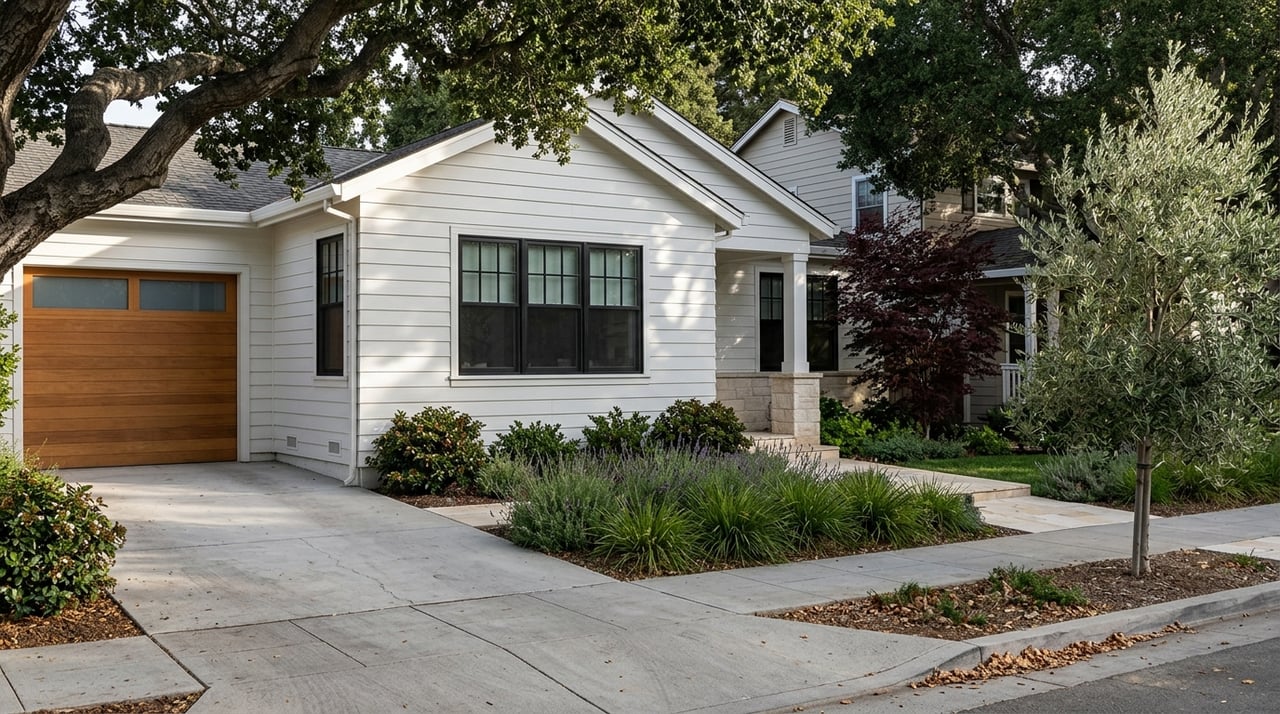
Across current resale descriptions, recurring features include:
- Clean, freshly updated façades
- Front porches or entry courts
- Manicured gardens
- Fresh exterior paint
- Black-framed windows
- Pergolas and trellises
- Flagstone or paver walkways
- Turf lawns
- Outdoor entertaining areas
These details matter because they build on what Pointe Marin already does well. The homes are large and prominent, so thoughtful exterior updates have a strong impact on first impressions.
Updated Without Losing Character
Some homes lean into a remodeled farmhouse look with elements like Dutch doors and wood pergolas. Others retain a more Mediterranean identity with courtyards and outdoor rooms.
The result is a neighborhood that feels current but not disconnected from its roots. You see variety from house to house, yet the area still reads as a unified enclave.
Floor Plans Add Variety
Pointe Marin does not appear to rely on a single repetitive house type. While the neighborhood feels cohesive, there is meaningful variation in footprint and plan size.
The early Breakers release included multiple large floor plans with both formal and informal living areas. More recent listings reference model names such as Montecito, Conservatory, Custom House, and Miramonte, which signals a range of layouts within the broader neighborhood.
The city’s tax report also supports that idea. It shows the 342-unit project area spread across 11 tax-rate categories tied to home size, suggesting a neighborhood with multiple plan sizes rather than one uniform template.
What Buyers Should Pay Attention To
If you are considering a home in Pointe Marin, it helps to look beyond square footage alone. The neighborhood’s value is also shaped by how each home relates to the streetscape, landscaping, and architectural rhythm around it.
When comparing properties, it can be useful to pay attention to:
- Whether the home sits on a court or cul-de-sac
- How original or updated the exterior style feels
- The presence of entry courtyards, porches, or outdoor rooms
- How the home connects to hillside or open-view surroundings
- The quality and consistency of exterior finishes
In a neighborhood like Pointe Marin, these visual and site-specific details often shape the overall impression just as much as the interior floor plan.
What Sellers Should Keep in Mind
If you own in Pointe Marin, your home is part of a neighborhood where presentation matters. Because the streetscape is so curated, buyers tend to notice exterior details quickly.
That does not always mean a full renovation is needed. In many cases, focused improvements such as paint, landscape refreshes, walkway upgrades, or cleaner architectural detailing can strengthen your home’s position in the market.
Architectural Review Is Part of the Process
The HOA’s governing documents require prior written approval for exterior painting, landscaping, tree removal, and many other visible exterior changes. Owners may repaint in the same colors without approval, but broader changes typically go through architectural review.
That process helps preserve consistency across the neighborhood. For sellers, it also means exterior improvements should be planned carefully and early, especially if your goal is to bring the home to market in top condition.
Why Pointe Marin Leaves a Strong First Impression
Pointe Marin works because several elements reinforce one another at the same time. The homes are substantial, the sidewalks are broad, the landscaping is maintained, the streets are calm, and the hillside setting adds natural texture.
Put together, those features create a neighborhood that feels composed and intentional. A concise way to describe it is this: a newer master-planned Novato enclave with broad sidewalks, landscaped courts, and a polished suburban-luxury look, where traditional and Mediterranean originals now sit alongside remodeled homes with farmhouse, Tudor, and other updated curb-appeal treatments.
If you are thinking about buying or selling in Pointe Marin, local neighborhood context can make a real difference in how you evaluate value, presentation, and buyer appeal. For personalized guidance on Novato and Marin homes, connect with Amadeo Arnal.
FAQs
What architectural styles are common in Pointe Marin, Novato?
- Pointe Marin is known for traditional and Mediterranean-influenced original homes, with many resales now showing Tudor-style and Napa-inspired farmhouse updates.
What makes the streetscapes in Pointe Marin stand out?
- The neighborhood is defined by wide sidewalks, landscaped edges, mature trees, pedestrian lighting, and a calm layout with courts and cul-de-sacs rather than a tight street grid.
Is Pointe Marin in San Rafael or Novato?
- Pointe Marin is in Novato, specifically in the Ignacio area.
How large are homes in Pointe Marin?
- Early Breakers at Pointe Marin homes were reported to range from 3,205 to 4,413 square feet, and the neighborhood includes multiple plan sizes across the 342-unit area.
Do Pointe Marin homeowners need approval for exterior changes?
- Yes, HOA documents say prior written approval is generally required for visible exterior changes such as painting, landscaping, and tree removal, although repainting in the same colors may not require approval.